Abortion of the Soul
Six works, shown in sequenceMy mother died of cancer when I was twenty. The hardest part was not her death. It was watching her fire go down, year after year, long before the illness. For every dinner she cooked for us, I saw a flame go out.
She was a natural leader, born to run things, in a world where a woman's place was the home. She loved us madly, and she chose to be a good mother, partly because she wanted to be one. Being that mother and living the life she was made for did not seem possible at the same time. I still wonder whether it is.
When a close friend, the mother of two small girls, was diagnosed with cancer, the wound reopened. I painted six works in six to eight weeks, one after the other, in this order: Ignorance, Delusion, Rejection, Illness, Abortion, Acceptance. The same words describe how we react to a diagnosis and how we avoid the life we feel is ours. For weeks I felt ill myself. There was no ritual this time. I stayed inside the concept and let it unfold, and for the first time I cut the canvas and added cardboard and paper, because I needed it to feel more physical. More present, perhaps.
This is not a medical or a spiritual thesis. It is how I tried to make sense of her death, and a question I still live with. My mother wanted a career, and that wish, which society gave her, was her fire. The same society asked her to be a mother first, and that tamed it. Why do we let our fire go out? To keep our place, or because we are afraid of shining in our own way?
The titleAbortion, here, means giving up life: not in one moment, but in the small ways we adapt, comply and compromise to keep a place in the world. In 2024 I called what is given up the soul. Today I am less sure the word matters. Even a soul, in a physical world, would have to adapt and compromise.
Six stages, in order
Hung as they were painted. The works are shown at their relative size.
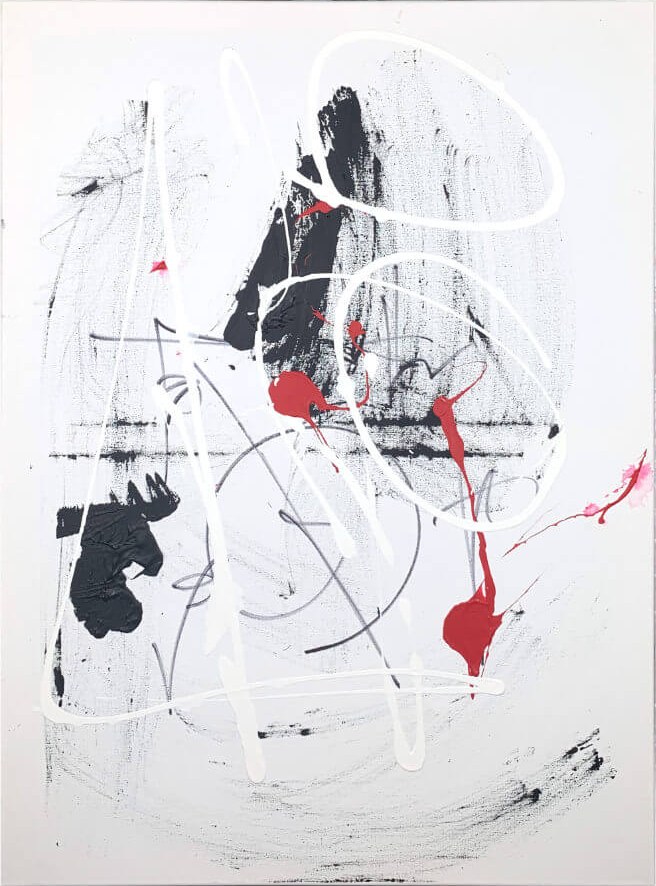
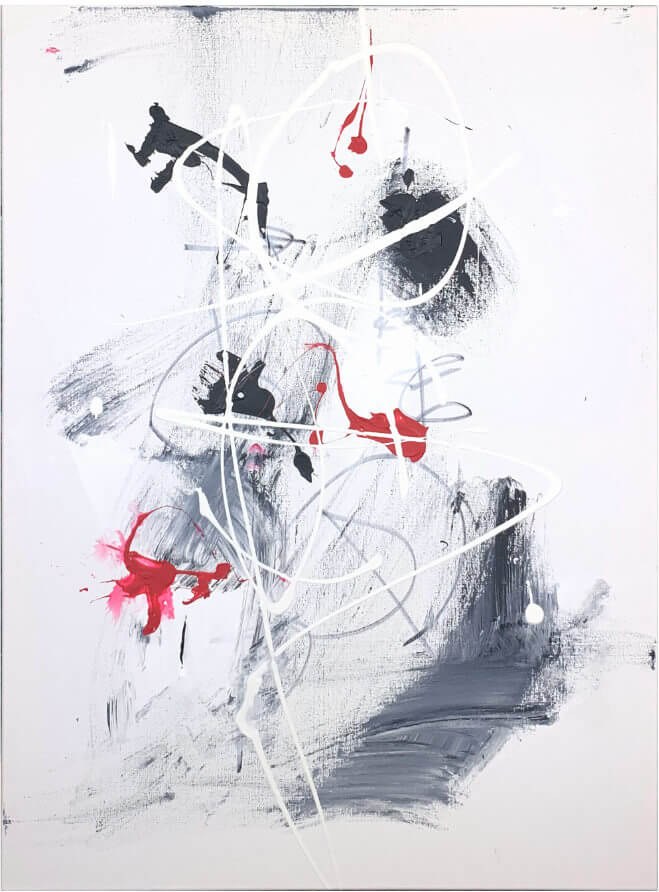
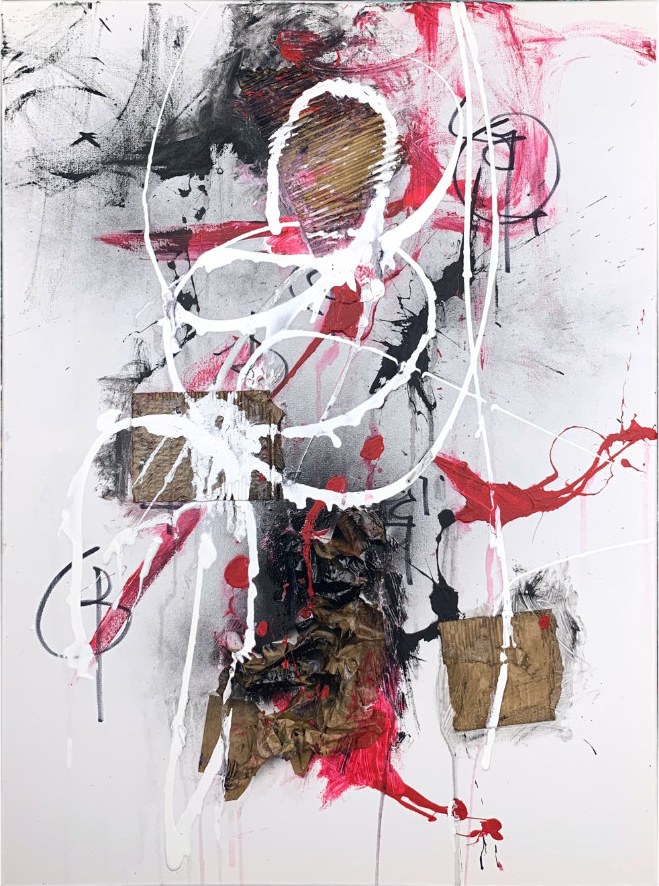
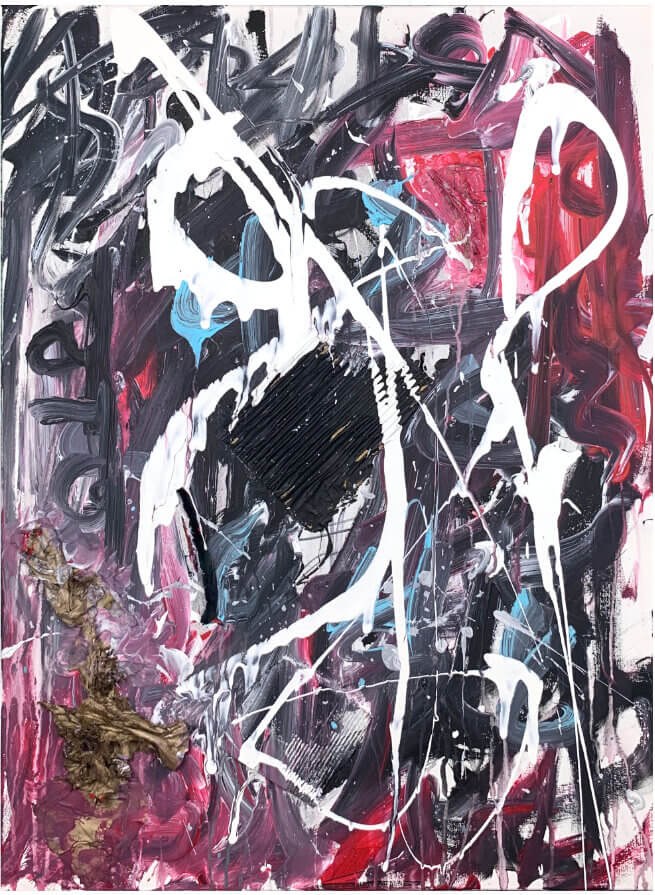
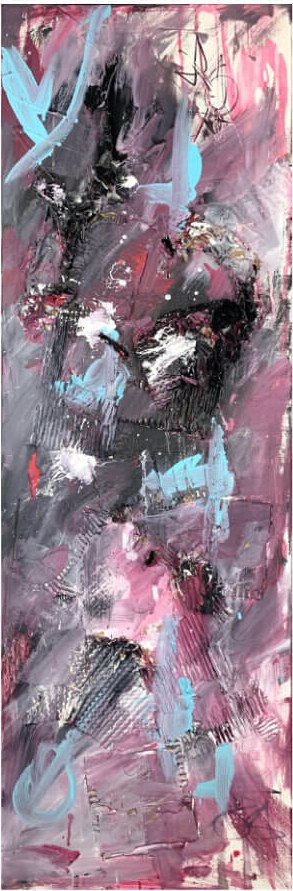
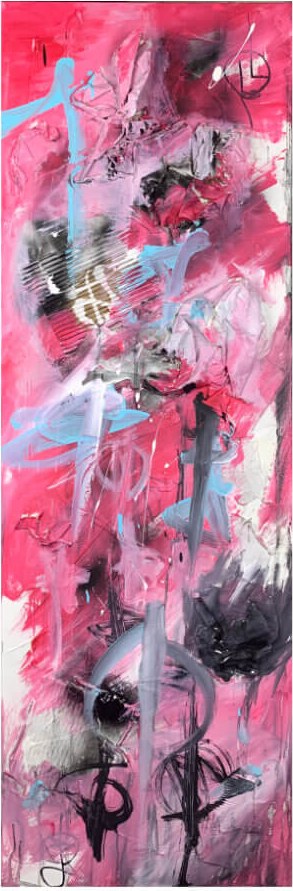
Illness
She was the strongest person I knew. When someone stole from us in one of Milan's roughest neighbourhoods, she knocked on the gang leader's door and got it back. Alone, calm, just words. That same man cried at her funeral.
The world she lived in had a different plan for her. Cook. Clean. Raise the children. For every meal she prepared, something inside her went out. For every floor she cleaned, a piece of her disappeared.
Illness is the fourth stage. I made it to show what that slow disappearance looks like, not in words but in paint. I still do not know if art can hold that much grief. But I have not found anything else that can.